
Dr. Moatasim Siddiq & Dr. Abdul Raouf al-Ghonaimy
Introduction
As the world stands at a critical juncture marked by deepening international polarization and escalating geopolitical tensions — exacerbated by the protectionist policies implemented by US President Donald Trump against dozens of allied, friendly and rival countries — China presented a contrasting vision for global power dynamics during the 25th summit of the Shanghai Cooperation Organization (SCO) in Tianjin. Attended by around 20 world leaders, the summit introduced a new model of international relations that rejects the unilateral security, economic and trade policies characteristic of a unipolar world order, posing a growing challenge to US dominance. This perspective is enhanced by the unveiling of a formidable arsenal of ballistic and nuclear weapons during a grand military parade, described as the largest in the country’s history. The event commemorated the 80th anniversary of China’s victory over Japan in World War II and served as a powerful symbol of shifting global alignments. It energized US rivals, strengthened the influence of the anti-Western bloc and underscored the SCO’s role in addressing global challenges and promoting a new, multipolar world order.
The timing, context and outcomes of the summit — alongside the massive military parade organized by China the following day — raise a series of pressing questions: What did the summit actually achieve? What does the SCO aspire to reshape in the coming period? Did the summit reveal that China has outmaneuvered the United States in the contest for global influence? What factors support the transformation of the SCO into an alternative to Western security, economic and political institutions? How has the West received China’s new message amid escalating global tensions? What signals does China intend to convey through its unprecedented display of military power? And what challenges stand in the way of its ambitions to dismantle the current unipolar order?
The Recent SCO Summit and the Features of the Global Landscape
Since the comeback of President Trump in early 2025, the world has witnessed a level of fluidity in international politics not seen in decades. His imposition of global tariffs and pursuit of “peace through strength” as part of a broader strategy to revive the American golden age and maintain uncontested US dominance over the international order has led to major shifts in global alignments, conflict dynamics and patterns of cooperation. The result is a highly volatile global scene, marked by growing rejection of unilateral US policies.
Below are key features of the international landscape leading up to the SCO summit:
Growing Global Discontent With US Protectionist Policies
In one of the most extensive tariff campaigns in modern history — widely criticized as a strategic misstep that fostered a bloc of international opposition to the United States and strengthened its global competitors — the Trump administration imposed duties on imports from dozens of countries.[1] These tariffs affected friends and foes alike, with rates ranging from 10%-50%. The move — as justified by Trump — aimed to restructure global trade in favor of the United States, reduce its trade deficit with key partners, boost domestic industries and put an end to what he described as the “looting of America” by friendly and hostile nations through unfair trade practices.
This policy sparked widespread international outrage due to its negative economic impact on the targeted countries — particularly those in the Global South[2] — fueling momentum for a global shift toward a more balanced international system, one that rejects the imposition of unilateral sanctions and tariffs.
Intensifying US Double Standards Toward International Conflicts
Countries of the Global South — and indeed much of the world — are closely and critically observing the growing double standards in US policy toward international conflicts and issues. This was especially evident in Washington’s repeated use of its veto power at the UN Security Council to block resolutions aimed at ending the war in Gaza, prior to the ceasefire agreement signed under the Trump Peace Plan in Sharm El-Sheikh in October 2025. This is besides continued US resistance of internationally recognized efforts to establish a Palestinian state along the June 1967 borders, while exerting pressure on other countries to obstruct the global momentum supporting Palestinian statehood.[3]
Moreover, the United States has long emboldened Israel, allowing it to commit grave violations against Palestinian civilians and continues to pressure international courts to block the prosecution of Israeli leaders accused of war crimes. In Africa, lingering resentment remains over a meeting widely described as humiliating — held in the Oval Office between President Trump and seven African leaders — especially when compared to the respectful reception given to the Russian president during a bilateral summit in Alaska.
Global concerns are also mounting over US efforts to assert control over disputed territories and islands around the world, as well as its push to nationalize rare commodities across various geographical regions. These policies have sparked intense criticism from both governments and civil societies toward the current global governance system, fueling momentum for the establishment of a new international order rooted in fairness and multilateralism.
Widening Circle of Opposition to Unilateralism
Sweeping US tariffs have increased global disaffection toward unipolarity, emboldening governments to advocate more vigorously for a new multipolar word order — one that offers greater room for middle powers and smaller states to safeguard their interests and limit the pressures exerted by a dominant pole seeking to protect its own interests regardless of those of other members of the international community.
While the push for multipolarity was once primarily driven by major powers with regional and global influence, today, medium and small states are more inclined than ever to seek a transformation of the global order. Driven by recent shifts in the global distribution of power and an awareness of the pitfalls of the current unilateral system where the United States advances its interests regardless of those of its allies and frequently forsakes its friends except for Israel, these powers increasingly seek to achieve at least a meaningful degree of autonomy in their foreign policy — free from the constraints of unipolar dominance.
Transatlantic Divisions Over Ukraine and Palestine
The transatlantic bloc is divided over the Russia-Ukraine war. European countries reject President Trump’s approach of Kyiv relinquishing part of its territory to Russia in order to stop the war. Instead, they insist that all Russian-occupied territory must be returned to Kyiv. European leaders believe that the United States has the leverage to compel Russia to engage in serious negotiations, as remarked by EU High Representative for Foreign Affairs and Security Policy, Vice-President of the European Commission Kaja Kallas.[4]
Within the context of this division, which in itself enhances the position of the anti-West camp, Europe drifted out of the US orbit with regard to the Palestinian issue, voting in favor of the two-state solution. This peaked with the UK — historically associated with the Balfour Declaration — recognizing the state of Palestine.
What Sets This Summit Apart From Others
China has picked up on signs of international dissatisfaction with US unilateral policies, capitalizing on the missteps of the Trump administration — whether related to breaches of diplomatic norms and international protocols or its double standards in handling global conflicts. Seizing the moment to expand its global influence and further erode the foundations of unipolar dominance. China — according to many analysts — is taking concrete steps toward launching a new phase in the international order, one that moves beyond the era of US unipolarity. Positioning itself as a stabilizing force in an increasingly turbulent and divided world, China transformed the summit into a global platform that brought together a majority of countries either critical of US unilateralism or maintaining strained relations with Washington.
The Chinese leadership presented a vision for a new model of international relations — one that distances itself from US values and emphasizes partnership over dependency, collectivity over unilateralism, structured governance over arbitrary decision-making and equality over discrimination and imbalance among nations, in line with its official narrative.
Embracing a Bloc Opposed to US Unilateralism
As per international relations, countries traditionally exercise great caution when dealing with rivals of a global superpower — even if those rivals are part of an international organization — out of fear of that superpower’s far-reaching influence through sanctions or political pressure. However, China seemingly appears to have crossed this line by openly embracing countries that oppose US unilateral policies, whether directly or indirectly. This includes not only the 10 member states of the SCO, but also non-member countries such as North Korea, Türkiye, Indonesia, Malaysia, Laos, Vietnam and Turkmenistan, among others. The recent meeting was the most widely observed in the organization’s history, given the following considerations:
Affirming the 21 century as distinctly Asian: The summit aligned with the views of leading theorists who argue that the 21st century belongs to Asia. Despite continued Western — particularly US — efforts to preserve the current global order rooted in Western norms, the summit brought together emerging economic powerhouses from across Asia. It also marked the first time leaders of five Eurasian nuclear powers — China, Russia, North Korea, India and Pakistan — gathered at a single summit, sparking concern in both Europe and the United States. This development adds to the strategic weight of the organization, whose members represent nearly half of the world’s population and approximately 23.5% of global GDP.[5] Member states also possess vast reserves of energy resources and rare commodities, and the bloc presents itself as a military, political and economic counterbalance to the Western alliance.
A consensus among participating countries on the summit’s core issue: China succeeded in introducing a central issue that differed from those raised at previous summits — the need to establish a new international order grounded in global justice and free from unilateral dominance, sanctions and tariffs. This proposal received broad consensus among the participating countries, particularly the five nuclear powers, who viewed it as a step toward curbing Western influence. This can be read through the personal rapport among the leaders of these nuclear states during the summit’s official proceedings and the private meetings held on the sidelines —especially those involving Indian Prime Minister Narendra Modi, Russian President Vladimir Putin and North Korean leader Kim Jong Un. In this context, Putin expressed his support of China’s approach, noting that the SCO could take on a leading role in efforts to form a more just and equitable system of global governance in the world.[6]
This alignment reflects a shared vision among China, Russia, India and North Korea to shape a new force at the heart of Asia — one that refuses to remain a subordinate or secondary player in the international system, and instead seeks to become a driving force behind a new global order free from Western dominance. Their consensus comes at a pivotal moment in global politics, as the world enters a new phase in which traditional paradigms are being upended. Today, every power — including middle powers across various regions — is acting according to its own interests and strategic priorities, leaving the West to confront an unavoidable reality: unqualified supremacy may be drawing to a close, and the center of global influence may soon shift from the United States to a vast geopolitical chessboard where each power moves with its own weight and leverage.
India’s notable shift toward the anti-Western camp: India, a longtime ally of the West, sent a clear message through its prominent participation in the summit — achieving greater independence in its foreign policy is now a strategic priority. Compared to previous periods, India is showing deeper alignment with China, Russia, Iran and North Korea. This shift is partly driven by the economic fallout from US tariffs imposed during the Trump administration, which targeted India for continuing to purchase Russian oil in huge amounts. In response, New Delhi has sought to diversify its partnerships and strengthen ties with its Asian neighbors. Prime Minister Modi — albeit with ongoing border tensions that had led to a seven-year diplomatic freeze with China — chose to cooperate with Beijing amid US pressures. President Xi Jinping emphasized that China and India are not adversaries but partners in development and Modi reciprocated the gesture by affirming his country’s commitment to improving bilateral relations. Putin also referred to Modi as his “dear friend” prior to a sideline meeting at the summit.[7]
According to many analysts, US unilateralism is likely to yield more harm than good for Washington, for example, “retaliatory sanctions” against strategic ally India have pushed New Delhi to distance from the United States after decades of close cooperation. India’s assumption of the BRICS presidency and its readiness to host the 2026 summit, along with Modi’s declaration that the Global South will not succumb to pressure, but rather seeks a multipolar world order that gives it greater space to pursue its ambitions,[8] reflect India’s determination to resist US pressure and deepen its cooperation with the Eastern bloc in building a new multipolar global system.
China now ranks as India’s second-largest trading partner, just behind the United States, following a 7.5% increase in bilateral trade that brought the total to $124.5 billion in 2024. In comparison, US-India trade reached $125.2 billion. Russia maintained its position as India’s fourth-largest trading partner after the UAE, with trade reaching $70.6 billion in 2024.[9]
Beijing-Moscow relations assume a strategic dimension: China and Russia signed a binding agreement to launch one of the largest energy projects in the world, marking a major shift in global energy trade. The project involves constructing the Power of Siberia 2 gas pipeline, which will pass through Mongolia and deliver up to 50 billion cubic meters of Russian gas annually to energy-thirsty China.[10] This would grant Russia significant access to major Asian markets, compensating for the financial losses caused by reduced gas exports to European capitals and helping absorb the brunt of Western sanctions imposed since the outbreak of its war with Ukraine. Such a mega project reflects a desire within both countries to elevate relations from mere coordination and political consultation to a long-term strategic economic partnership — solidifying a Sino-Russian alignment that the Western bloc may find difficult to counter using conventional tools.
China’s hosting of a bloc opposed to US unilateralism sends a clear message to both Western allies and non-aligned powers: it now possesses comparable leverage and is no longer intimidated by sanctions or US pressure. China is positioning itself as an alternative global pole — a heavyweight capable of embracing allies and defending collective interests against US hegemonic ambitions. This also indicates that Asian solutions will be put forward to address international challenges, and that Trump’s view — that Beijing’s dependence on the US market would force it to make concessions on outstanding issues — is being met with a counter-approach: China argues that the world’s reliance on its strategic products will, in turn, pressure Washington to make reciprocal concessions.
Diplomatic Etiquette Observed in Welcoming World Leaders
President Xi’s warm and ceremonious reception of global leaders and officials offered a striking contrast to the US approach during the Trump era. Widely circulated videos and photographs captured the scale of hospitality extended by Xi — accompanied by his spouse — to his guests, including heads of state and senior officials. The scenes conveyed a clear message: China values and respects its guests, regardless of the standing or influence of their countries.
This stood in contrast to the abrupt and often informal manner in which Trump received foreign dignitaries, as seen in his meetings with the king of Jordan, the president of Ukraine, African leaders and even European counterparts. Such interactions, which at times disregarded established diplomatic protocols, reportedly led some leaders to reconsider visits to the White House — like the Ukrainian president who began bringing European leaders along when meeting with the US president. These moments, lacking in diplomatic courtesy, have shaped perceptions of the United States among many world leaders. Xi, recognizing this shift, sought to project a different image — one of a nation that honors not only heads of state but also high-ranking officials, reinforcing China’s commitment to respectful and inclusive diplomacy.
A Distinct Chinese Vision for the Future of International Relations
Both the opening remarks of the Chinese president at the summit and the final communiqué suggest that the Chinese leadership is investing in the widening anger against US policies by presenting a vision anchored in multipolarity, international justice and equality. This vision includes a damning indictment of what the president termed the “cold war mentality” sustaining US unilateral global leadership. He proposed a new model for global governance to address the mistakes of unipolarity, as evident in his statement, “I look forward to working with all countries for a more just and equitable global governance system and advancing toward a community with a shared future for humanity.”[11]
The following reflect the key features of the Chinese president’s vision:
- A multipolar world order: Member states of the organization — and their global standing — should serve as a foundation for strengthening a multipolar international system.
- Building a counterweight to the current global power balance: The combined weight of member states form a stabilizing force for global equilibrium. As stated in Xi’s speech: “SCO member states have rich energy resources, big markets and strong internal driving forces, and we are contributing a rising share to world economic growth.”
- Global governance: Xi proposed what he called a Global Governance Initiative (GGI), emphasizing that no single country should take unilateral actions that violates international law and established norms — especially in the realm of international trade. This proposal was considered one of China’s key achievements at the summit.
China Flexes Its Military Muscle
On the 80th anniversary of China’s victory over Japan in World War II, Xi led a grand military parade in Tiananmen Square, Beijing, attended by around 26 world leaders. Standing to Xi’s right was Putin, engaged in a fierce war against Western-allied Ukraine and to his left, North Korean leader Kim whose forces have reportedly supported Russian battlefronts with weapons and personnel.
Described by international media as the largest since the founding of the People’s Republic of China, the flashy military display included a keynote speech by Xi with strong symbolic undertones. He declared, “The rejuvenation of the Chinese nation is unstoppable,” adding, “Today, humanity once again faces a choice between peace or war, dialogue or confrontation.” Following the parade, Xi, Putin and Kim held a trilateral meeting that reportedly provoked anger from Trump who referred to it as a “conspiracy” against the United States.
Another striking aspect of the occasion is that it showcased a shift in China’s offensive and defensive capabilities — an effort to redraw the global strategic map. The parade displayed intercontinental advanced weaponry and air defense systems powered by cutting-edge technology. The underlying message was clear: the world is no longer unipolar. The parade’s central theme, therefore, was not merely a commemoration of victory over Japan, but a declaration of China’s evolving military and geopolitical posture.
Shifts in Offensive Capabilities
China has presented more advanced offensive intercontinental systems with medium and long ranges that could strike adversaries beyond the regional sphere. These systems span the globe and send strategic deterrent messages to foes and rivals.
A nuclear triad capability: The nuclear triad refers to the three military platforms capable of delivering nuclear weapons: strategic bombers, land-based intercontinental ballistic missiles and sea-based intercontinental ballistic missiles. This triad ensures nuclear deterrence and provides the capability to launch retaliatory strikes against any party anywhere across the globe (see Table 1).
Table 1: China’s New Strategic Weapons — Components of the Nuclear Triad
Strategic bombers by Shenyang Aircraft Corporation
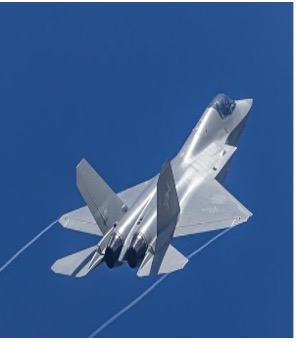
- Stealth fighter J-35
The J-35 represents the latest advancement in China’s stealth fighter technology, marking a new chapter for the Chinese air force. As a fifth-generation, multirole aircraft, it is designed to complement the capabilities of the J-20. Recently unveiled, the J-35 features radar-evading stealth comparable to the US F-35. Its integration into China’s air force gives the country a unique distinction as the only nation operating two distinct fifth-generation fighter jets simultaneously — creating a mix of low-and high-altitude stealth platforms. Strategists describe the J-35 as a cornerstone of China’s strategic armament in any potential aerial or naval conflict. It embodies China’s ambition to shift from merely defending its coastline to projecting power across the globe.
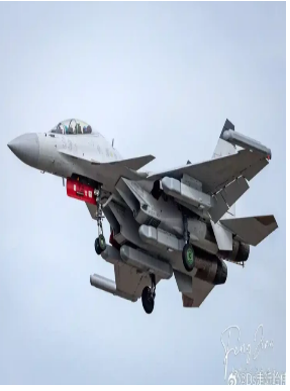
- J-15 T fighter
The fighter is an upgraded variant of the J-15, featuring greater launch flexibility — it is compatible with various types of aircraft carriers, allowing it to operate effectively across different environments. The aircraft can take off using two distinct methods: the first is a catapult launch system used on modern carriers, enabling it to launch with a full payload of weapons and fuel — significantly enhancing its combat capabilities. The second method is a ski-jump launch, used on older carriers equipped with an inclined ramp at the bow. However, this method limits the fighter’s ability to take off with a full payload. If trials prove successful, China will become the second country in the world after the United States to possess the capability of launching fighter jets from an aircraft carrier using an electromagnetic catapult system. Currently, the US Navy’s Gerald R. Ford is the only carrier globally equipped with this technology.
- J-15 D fighter
It is a jamming fighter that launches via the same two methods as the J-15T. It is not designed for direct combat, but rather to accompany offensive fighters and disrupt enemy radar and communication systems as part of an electronic warfare strategy deployed ahead of strike missions. In other words, it acts as the “eyes” of the fighter fleet, enhancing the likelihood of success in combat operations.
Land-based intercontinental ballistic missiles
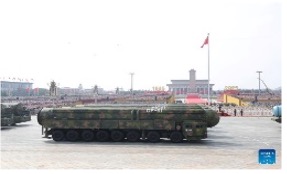
- DF-61 missile
The intercontinental missile is capable of spanning the entire globe, reaching even the farthest points from China. It can carry multiple nuclear warheads and be launched from mobile platforms, granting it enhanced stealth, maneuverability and the ability to evade enemy targeting — unlike conventional missiles stationed on fixed launchers.
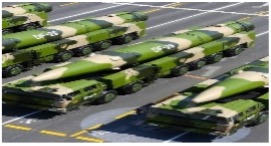
- DF-26D missile
The missile is an advanced variant of the medium-to-long-range ballistic DF-31. It is capable of carrying nuclear warheads and has a range of up to 5,000 kilometers. Known as the “Guam Killer,” it is designed to target US military bases on the island of Guam in the western Pacific.
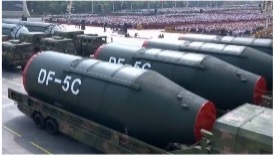
- DF-5C missile
It is an upgraded ballistic missile from a series that dates back to the 1970s. This latest version boasts an extended range of over 20,000 kilometers and can carry up to 12 nuclear warheads, theoretically enabling it to strike any target on Earth. It travels at hypersonic speeds.
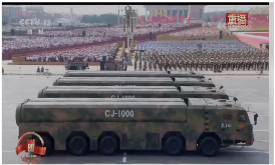
- CJ-1000 missile
It is a land-based strategic hypersonic cruise missile with a top speed of Mach 7 and an estimated range of 5,000 kilometers. It is capable of striking strategic ground targets, bombarding large naval vessels and attacking slow-moving airborne platforms such as refueling aircraft and early warning systems. These capabilities make it a powerful tool for executing long-range strategic missile strikes. The CJ-1000 is part of Beijing’s broader push to develop advanced long-range offensive hypersonic systems aimed at strengthening deterrence and expanding precision-strike options.
Sea-based intercontinental ballistic missiles
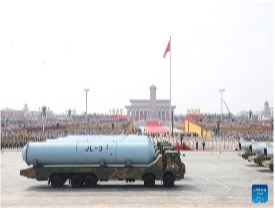
- JL-3 missile
It is a ballistic missile deployed from nuclear submarines such as the Type 094. It enables the Chinese military to carry out stealth strikes from deep beneath the sea, making it difficult to trace the launch origin. This adds an element of surprise to China’s nuclear strategy and strengthens its deterrence posture by ensuring the capability for a sudden retaliatory strike. These weapons also give China the ability to conduct a second strike from underwater — a critical component of nuclear deterrence.
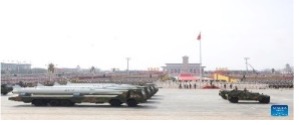
- JL-1 missile
The missile is designed to be carried by strategic bombers and launched from long distances, providing flexibility in targeting enemy strategic sites. It completes the triad of China’s nuclear capabilities — land-based, sea-based and air-based — enhancing the overall reach and resilience of its deterrence strategy.
New hypersonic missile arsenal: Alongside its nuclear triad, Beijing has unveiled an advanced arsenal of hypersonic missiles (see Table 2). These cutting-edge weapons are distinguished by their high speed, precision, ability to alter flight paths mid-air and radar evasion — unlike conventional missiles. This makes them highly destructive. Their detection by traditional early warning systems is extremely difficult and they are capable of penetrating even the most sophisticated defense networks. Once a hypersonic missile is launched, the adversary has only a brief window to respond and by the time it is detected, it is often too late to take effective countermeasures.[12]
Table 2: China’s New Hypersonic Weapons
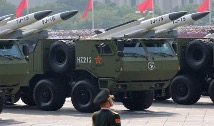
- YJ-15 missile
It belongs to the class of tactical ballistic and cruise missiles, launched from aircraft or naval vessels. Unlike strategic ballistic missiles used for nuclear deterrence, this missile is designed for rapid missions and programmed low-altitude flight to strike large naval assets — such as aircraft carriers and destroyers — with high precision and can inflict severe damage. It stands out for its advanced hypersonic speed, exceeding Mach 5, which makes interception by conventional air defense systems extremely difficult.
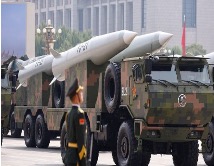
- YJ-21 missile
A more advanced missile than the YJ-15, nicknamed in China the “aircraft carrier killer,” the YJ-21 is a dual-platform ballistic missile designed to neutralize one of the most powerful tools in the US naval arsenal — aircraft carriers. The YJ-21 combines the speed of ballistic missiles with the maneuverability of cruise missiles. It can be equipped with multiple warheads and has a range of 1,500 kilometers. Its hypersonic velocity exceeds Mach 6 during mid-flight and reaches up to Mach 10 as it nears its target, making interception nearly impossible. The missile also features a quasi-ballistic flight path that allows for in-flight maneuvering, supported by advanced navigation systems and satellite-guided targeting — enabling it to strike large naval vessels, whether stationary or moving, with high precision.
Shifts in Defensive Capabilities
New defense systems: Besides shifts in offensive capabilities, China unveiled a new generation of advanced defense systems (see Table 3), reflecting a broader transformation in its defensive posture. These systems are designed to address a wide spectrum of regional and international threats — ranging from satellites to drones.
Table 3: China’s New Defense Systems
| HQ-22A missile defense system | It is an integrated tri-layered system designed to counter drone swarms. Nicknamed the “iron triad against drones,” it combines three levels of defense: Microwave-based disruption, which interferes with and jams hostile targetsHigh-speed laser interception, which neutralizes drones with precision and speedConventional missile engagement, which targets and destroys threats from long distances. |
| HQ-29 (Red Banner) system | It is a sophisticated defensive weapon designed to intercept ballistic missiles during the midcourse phase of their trajectory — when they pass through space beyond Earth’s atmosphere. It is also capable of striking satellites in low Earth orbit, giving China the ability to destroy enemy surveillance and guidance assets. In other words, this new system targets the “watchful eyes” that monitor and direct from above. Its role is comparable to that of the US Navy’s SM-3 interceptor system. The HQ-29 represents a key component in the expansion of China’s missile defense capabilities, particularly within its anti-access/area denial (A2/AD) strategies. |
| HQ-20 air defense system | It is an advanced air defense system equipped with a mobile launcher mounted on an eight-wheel platform, capable of carrying at least eight interceptor missiles. It is designed similarly to the HQ-9 system but uses smaller-sized missiles. |
Table created by Rasanah IIIS.
Smart warfare capabilities: China revealed equipment for smart warfare and displayed enhanced capabilities in this domain (see Table 4).
Table 4: Smart Warfare Equipment
| HSU100 unmanned underwater vehicle | It is a military platform resembling conventional submarines but designed to operate without a crew. Measuring approximately 20 meters in length, the HSU-100 is intended for intelligence gathering and long-range targeting of enemy forces deep within the ocean. It provides China with a new strategic advantage in naval warfare. |
| AJX002 unmanned underwater vehicle | It is designed for deploying naval mines. Military experts consider it an effective tool that enables China to impose a full maritime blockade on Taiwan and to shut down strategic straits and sea lanes across the Indo-Pacific in the event of a large-scale conflict or war. |
| Aquatic drones | The military parade featured advanced aquatic drones in addition to aerial drones — posing a serious threat to aircraft carriers and other naval assets. |
| Combat robots | Also notable in the parade were combat robots resembling robot dogs mounted on armored vehicles. These are designed for reconnaissance and logistical support, and can be deployed in combat zones if equipped with weapons. |
| Laser weapons | China also unveiled new high-energy laser weapons capable of emitting concentrated laser beams to rapidly destroy or disable drones at a fraction of the cost of conventional missiles. Additionally, it revealed electronic warfare systems that use electromagnetic waves to disrupt drone control systems — causing them to lose balance, communication and navigational ability, rendering them completely inoperative. |
Table created by Rasanah IIIS.
Strategic Dimensions of China’s New Weaponry
The new Chinese weapons showcased during the recent military parade reveal a range of strategic, political and economic dimensions, as outlined below:
Cementing a deterrence doctrine to assert dominance: By developing long-range offensive and defensive capabilities and integrating them into a unified command structure, Beijing is establishing a broad deterrent shield and ability to confront adversaries with an interconnected web of threats that is difficult to disrupt or penetrate. This shield aims to achieve three core military objectives:
- Conducting precision preemptive strikes: China aims to reach the farthest corners of the globe with its arsenal of intercontinental ballistic and hypersonic missiles.
- Blocking access to Chinese territory and sovereign waters: Through a layered deterrence system, China seeks to prevent adversaries from approaching its mainland or strategic zones in the South and East China Seas. This includes anti-ship hypersonic missiles capable of striking large naval vessels with exceptional speed and accuracy, swarms of aquatic drones, and advanced unmanned submarines that function as mobile minefields — making any approach toward Chinese shores a perilous endeavor. US aircraft carriers, in particular, would face heightened operational challenges near China’s coasts or the Taiwan Strait.
- Undermining enemy superiority in combat zones: China is deploying medium- and long-range ballistic missiles alongside advanced defensive systems to neutralize adversarial advantages across various theaters of conflict. This integration of offensive and defensive capabilities marks a qualitative shift in China’s strategic thinking — from coastal defense to shaping a new regional reality. It sends a clear message to the United States: the Indo-Pacific is no longer an uncontested US domain.
Achieving a global balance of terror: The nuclear triad represents the most significant evolution in Beijing’s offensive posture. It provides China with an extended military reach capable of striking any point on Earth, reinforcing its strategic deterrence and retaliatory power. For example, even if China’s land-based platforms were destroyed, its submarines and strategic bombers would still be able to deliver a devastating counterstrike. This development places China alongside the United States and Russia as the only nations possessing a complete nuclear triad — capable of launching intercontinental nuclear attacks from land, sea and air simultaneously. Such capability forces adversaries to reconsider any preemptive strike, as targeting one leg of the triad would not neutralize China’s ability to retaliate. Each component of the triad compensates for the vulnerabilities of the others: Bombers offer long-range strike flexibility. Submarines ensure survivability and stealth in deep-sea operations if land bases are compromised. Land-based missiles provide rapid launch capabilities. This synergy enhances the credibility and adaptability of China’s nuclear deterrence — whether through maneuvering, strategic deployment, or executing a second strike from sea or air. Disabling the triad becomes a near-impossible task for any adversary.
Moreover, China’s development of unmanned submarines signals a strategic shift toward incorporating autonomous maritime platforms into its military doctrine. These systems offer the ability to threaten international shipping routes when necessary and to monitor or counter deep-sea threats. This approach is especially relevant in light of lessons learned from incidents like the Nord Stream pipeline sabotage, underscoring the strategic value of unmanned technologies in protecting critical underwater infrastructure.
Asserting military-industrial independence: For decades, China’s military industry largely relied on adapting US offensive and defensive weapon designs. However, during its recent military parade, China unveiled advanced, domestically produced military equipment manufactured by the Chinese company Xiang. According to strategic experts, these systems meet globally advanced specifications and reflect a leap into 21st-century military innovation.
Learning from modern warfare recent conflicts: Wars in Ukraine and Palestine have highlighted the decisive role of drones in combat, especially given their low cost. In response, China showcased its Iron Triad anti-drone system, designed to intercept drones with high precision and efficiency. This enhances the People’s Liberation Army’s ability to protect its arsenal against drone swarms and hostile missiles at a significantly lower cost.
Criticisms of China’s advanced weaponry: One major criticism of China’s new weapons is that most have yet to be tested in actual combat, making their effectiveness uncertain — except for the advanced aircraft used by Pakistan in its conflict with India. Moreover, China’s large-scale military showcase is expected to prompt rival powers, particularly US-aligned Asian nations, to increase their defense spending and strengthen military alliances in response to China’s growing military strength. As a result, the parade may accelerate a new arms race in the Indo-Pacific and contribute to shifting global alignments and more volatile strategic balances.
The West’s Response to China’s Summit and Military Display
The recent SCO summit sparked clear discontent among US and European leaders. Trump described the summit as an anti-American “conspiracy”. In a post on Truth Social, he directly addressed the Chinese president, “Please give my warmest regards to Vladimir Putin and Kim Jong Un as you’re conspiring against the United States.”[13] In response, Washington took concrete measures against China, pressuring several Latin American countries to sever or downgrade ties with Beijing. The United States justified these actions as part of an effort to rid the region of what it called China’s “exploitative practices” and to safeguard regional security and stability.[14] Moreover, the United States imposed sanctions on several countries in Latin America, including denying entry visas to their citizens. Washington accused these countries of aligning with the Chinese Communist Party and either providing substantial support or engaging in activities that undermine the rule of law in Central America.[15]
In addition, the Indian prime minister’s attendance at the summit and his meeting with Chinese and Russian leaders prompted Trump to admit that he had lost both India and Russia to China.[16] This acknowledgment came amid rising tensions between Washington and New Delhi following Trump’s decision to impose tariffs on Indian exports. The move came against the backdrop of US disapproval with India’s purchase of Russian oil and accusations that it was indirectly funding Russian military operations. This marks a notable shift, as the United States had long maintained stable relations with India and built strong economic partnerships in hopes of positioning it as a counterweight to China and Russia.
The unease sparked by the SCO summit also extended to Europe, which described the meeting as “a direct challenge to the rules-based international order,” as stated by Kallas. Expressing concern over Xi standing alongside Putin and Kim, she said that their autocratic alliance is seeking a fast track to a new world order.[17] Finnish President Alexander Stubb also warned that the West risks losing influence and standing if it fails to adopt a more coherent foreign policy — particularly toward Global South countries such as India. He also said in the SCO context that the organization is attempting “to undermine the unity of the global West.”[18]
This growing concern was echoed in the British newspaper The Guardian, which noted that the Tianjin summit is a key part of Beijing’s push to challenge the dominance of the United States and Western-led alliances such as NATO. However, the newspaper argued that this effort has been reinforced by global upheaval triggered by President Trump’s tariffs and other shifts in US foreign policy.[19]
These voiced concerns are attributed to the increasing economic, military and political weight of the SCO member states such as China, Russia and India.
Economic Ascendancy
The SCO is gaining increasing prominence, transforming from a security-focused organization of just six founding members into a major economic and political bloc including 10 countries. Among these are China and Russia — two global powers — as well as India, a rising economic force. This is along with four nuclear powers — China, Russia, India and Pakistan. The organization also comprises some of the world’s largest countries by land area and nearly half of the global population. India, for example, ranks first with approximately 1.464 billion people, followed by China with over 1.416 billion, and other densely populated countries are Pakistan, Russia and Iran.[20]
In the economic sphere, the SCO includes strong and emerging economies, offering a vast market and immense growth potential (see Table 5).
These substantial capabilities position the organization as a key player in shaping global power balances, especially amid profound shifts in the international order. China, for instance, is the world’s second-largest economy by GDP thanks to its immense economic and industrial capabilities. It also holds a leading role in advanced technology and foreign investment, in addition to having the world’s largest labor force — earning it the title of “the world’s factory.”
According to World Bank data, prominent SCO member Russia ranked fourth among the world’s largest economies based on purchasing power parity (PPP), which reflects current price levels in each country’s economy. Russia’s PPP in 2024 reached approximately $6.92 trillion, up from $6.45 in 2023.[21]
India, another SCO-affiliated country, is one of the fastest-growing economies in the world and expected to continue climbing the ladder of global economic power in 2025. According to IMF forecasts from April 2025, India’s official GDP is projected to exceed $4.2 trillion. The Indian economy is driven by several key strengths, including a large and growing domestic market, a young and sizable workforce, the expansion of its services and technology sectors and increased investment in infrastructure and digitalization.[22]
India’s economic growth over the past two decades has also led to significant progress in reducing extreme poverty. Between 2011-2019, estimates suggest that the proportion of the population living in extreme poverty — defined as less than $2.15 per person per day — was cut in half. Although the pace of poverty reduction has slowed in recent years due to the impact of the COVID-19 pandemic and other global challenges, India remains the fastest-growing major economy in the world, with a growth rate of 8.2% in the 2023/2024 fiscal year.[23] Public investment in infrastructure and increased household investment in real estate have helped drive this growth. The manufacturing sector recorded strong growth of 9.9%, while the services sector remained resilient, offsetting weaker performance in agriculture. Government initiatives have aimed to boost manufacturing by improving the business environment, enhancing logistical infrastructure, increasing tax efficiency and rationalizing tax rates.
Table 5: Global Economic Share of SCO Member States (2024)[24]
| Country | Economic size | Growth rate (%) | Share of global economy (%) |
| China | $18.7 trillion | 4.9 | 16.8 |
| India | $3.9 trillion | 6.5 | 3.5 |
| Russia | $2.2 trillion | 3.2 | 1.9 |
| Iran | $440 billion | 3 | 0.39 |
| Pakistan | $370 billion | 2.5 | 0.34 |
| Kazakhstan | $290 billion | 3.1 | 0.26 |
| Uzbekistan | $110 billion | 6.5 | 0.10 |
| Kyrgyzstan | $17.5 billion | 9 | 0.02 |
| Belarus | $ 62 billion | 4 | 0.056 |
| Tajikistan | $14.2 billion | 8.4 | 0.01 |
Military Might
SCO member states possess immense military capabilities, with several fielding some of the world’s most powerful armies. According to the Global Firepower ranking of the world’s strongest militaries, Russia comes second following the United States in terms of military power, followed by China in third place and India in fourth. Countries like Pakistan and Iran also hold advanced positions among the top 20 military powers.[25]
Moreover, four SCO member states are among the world’s nine nuclear powers. Russia possesses the largest confirmed nuclear arsenal globally, with over 5440 warheads, followed by China with 600, India with 180 and Pakistan with 170.[26] While Iran does not currently possess nuclear weapons, it runs a nuclear program that includes several reactors. Following the US withdrawal from the 2015 nuclear agreement between Iran and the six major powers, Iran intensifies its nuclear enrichment activities — raising concerns among Western countries and the International Atomic Energy Agency (IAEA) about the possibility that Iran may be planning to join the nuclear club, especially after its stockpile of 60% enriched uranium surpassed 406 kilograms.
In terms of military spending, China ranks second in the world, reaching approximately $314 billion, marking three decades of continuous growth. China accounts for 50% of total military expenditure in Asia and Oceania, including ongoing modernization of its armed forces and expansion of its cyber warfare capabilities and nuclear arsenal.[27] Russia has also seen a notable increase in military spending in recent years, reaching an estimated $149 billion in 2024 — a 38% rise compared to 2023.[28] India follows as the third-highest military spender among SCO countries, with $86.1 billion.[29]
Political Clout
For many years, the West has — first Europe then the United States — has shaped the contours of the international order. Currently, however, it seems that there are countries and organizations dissatisfied with Western dominance and seek to change this longstanding global reality. The SCO stands at the forefront of these efforts, which operates according to carefully crafted plans to advance this goal, despite the challenges and obstacles that surround it. In a relatively short historical period, the organization has managed to gain significant political weight on the political stage, establishing itself as a platform for balancing power and laying the groundwork for a new international system to counter unipolarity.
The SCO has proven adept at bringing rivals and partners under one roof, setting aside internal dispute to peruse its overarching objectives. India’s participation in the recent summit in China is a prime example, as it attended despite deep tensions with Beijing — a shift that has raised concerns among the Europeans. Given its growing influence, many countries in the Global South and even among developing countries now view the SCO not merely as an economic, security and political cooperation body, but rather as the only organization capable of halting Western dominance and preparing the ground for a multipolar world allowing each country to enhance its status and advance its national interests.
Two SCO member states — China and Russia — hold UN veto power, which strengthens their role in promoting international stability and serves as a critical safeguard against interference in other countries’ affairs and against US hegemony. The excessive use of veto by Washington has undermined the original purpose of its creation: maintaining international peace and security. This is evident in its use to serve US strategic interests and protect its allies, with disregard for other countries.
Challenges Facing China’s Ambitions to Dismantle Unipolarity
Despite the rapprochement that raised Western concerns between leaders of China, Russia, India and North Korea during the summit and the military parade, several challenges still stand in the way of China’s efforts to form an Asian axis that includes India to establish a multipolar international order.
Centrality of Outstanding Disputes Between China and India
Despite positive signs of Sino-Indian rapprochement and India’s participation in the recent Tianjin summit along with the outcomes that may serve China’s goals of countering Western global dominance, real challenges remain that hinder closer ties between the two countries, foremost among them the ongoing border disputes. The historical conflict centers on the regions of Aksai Chin and Arunachal Pradesh. China claims that India occupies Arunachal Pradesh, while India accuses China of occupying Aksai Chin, which lies near the Kashmir region. Both countries reject the border demarcation established by the British, resulting in a prolonged unresolved crisis.[30] While some Western powers seeking to fuel this conflict and the absence of mutually recognized legal and political frameworks for border demarcation or negotiation, a return to tensions or even confrontations remains highly likely.
China’s close ties with Pakistan are a constant source of concern for India, as the latter view Beijing’s support for Islamabad as a strategy to contain the country in the southern Indian Ocean. This is given their strong strategic partnership, exemplified by the China-Pakistan Economic Corridor. China also supplies Pakistan with a significant share of weapons, including fighter jets and submarines, enhancing its military capabilities against India, along with political backing in international organizations.[31]
Moreover, recent tensions in US-India relations over US tariffs do not necessarily indicate a long-term shift. This is given India’s strategic importance to Washington and Western countries as one of the world’s largest democracies with close economic and technological ties to the West, as evidenced by the recent acknowledgement by Trump of “losing” a reliable ally to China. This suggests that Washington-New Delhi could rebound, whether during Trump’s presidency or afterward.
As the Indian Ocean has gained increasing priority in China’s strategic agenda and given that Chinese influence in countries across the region has grown significantly in recent years, tensions have been simmering between China and India which has long considered the region as part of its sphere of influence. For New Delhi, the Indian Ocean’s importance stems from its vital maritime routes for global trade and its strategic corridors linking the Middle East, South and East Asia, Europe and the Americas. It includes 33 coastal countries with a combined population of about 2.9 million.[32] Recent development in countries like Sri Lanka, Bangladesh, the Maldives and Nepal have provided China with opportunities to enhance both its ties and influence in this sensitive and critical region. As China continues to establish a presence in areas traditionally considered part of India’s sphere of influence, this issue is expected to become a major point of disagreement and rivalry between the two countries.
Lack of a Unified Vision on Regional and International Issues
The three powers — China, India and Russia — do not share a unified vision on regional and international matters. Regionally, leadership remains a contentious issue between China and India, despite the public display of agreement between their leaders during the summit. India fears for its status and regional interests under China’s unilateral leadership in the Indo-Pacific. Therefore, India’s perspective aligns more closely with the West’s, favoring a role for China as a regional balancer rather than a dominant force.
Moreover, China and India differ in their stance toward the current unipolar international system. While India is frustrated by unilateral policies such as tariffs and trade restrictions, China’s opposition to unipolarity is more pronounced and far-reaching. This divergence is also witnessed in China’s relations with Russia in the international arena where Moscow aspires to become a pole — both China and the United States believe that Russia lacks the necessary global capabilities to fulfil this aim. This could lead to future tensions between China and Russia over the shape of the international system, even though they currently stand united in response to US policies.
Western Economic Pressures and Incentives Targeting India
Western countries are exerting significant pressure on India to dissuade it from building strong relations with Russia and China. A notable example is the European criticism of Modi’s visit to Moscow in July 2025 and the concern expressed by the Trump administration over growing India-Russia relations. Given India’s substantial interests with the West, New Delhi may respond to these pressures by distancing itself from the Sino-Russia axis.
Complementing these pressures, the West is offering India incentives to encourage its pursuit of economic openness and trade labialization, while countering Chinese influence. For instance, the United States and European G20 members have supported an economic corridor project linking India to Europe via the Arabian Peninsula and Israel, aimed at countering China’s Belt and Road Initiative.
Additionally, the Trump administration has pressured India to halt purchases of discounted Russian oil — a key factor behind the imposition of tariffs on New Delhi. In return, the US administration seemingly has succeeded in enticing India with increased imports of US oil and gas. Trump even stated that Modi had promised to stop buying Russian oil soon, which could place economic pressure on Moscow that is desperate for energy revenues amid its war with Ukraine and Western sanctions.
US Possession of Global Dominance Tools
The United States remains the dominant global power across multiple domains, including military, diplomatic, political, economic, technological, media and soft power. As such, it believes it can defeat what it views as defiance from China and other emerging powers against US-led unipolar international system.
In the military sphere, the United States has long led the world in military spending, outpacing China by more than double as of 2022.[33] It also possesses the world’s most powerful military, with a wide array of advanced weapons and an extensive network of overseas bases. These capabilities make it a truly global military force, enabling it to assert dominance worldwide. Among 13 categorizes of military systems supporting this dominance — from nuclear submarines to satellites, aircraft carriers and heavy aircraft — China still lags behind the United States by about 20 % in most areas, with parity only in warships, destroyers and military satellites. This means that the United States remains far ahead militarily, having invested vast resources in developing these systems over decades. Closing these gaps will require years of effort and the disparity is likely to widen as quality improves.[34]
Beyond NATO, the United States has also expanded its alliances to encircle China, including AUKUS pact (the United States, Australia and the UK), aimed at countering Chinese dominance in the Pacific region. This is along with the Quad alliance (the United States, Japan, India and Australia) and efforts in the Middle East to expand the so called Abraham Accords, intended to limit China’s reach into traditional US spheres of influence.
In the economic field, the US economy is the largest in the world, enabling Washington to use its economic leverage to influence other countries through trade deals, loans and investments. It holds an unmatched position in global capital markets. In terms of technology and innovation, the United States is home to the world’s largest tech companies leading advancements in AI. The gap between the US and Chinese GDP is around $10 trillion.[35] In addition, the United States benefits from vast economic resources, including raw material, capital sources, markets and its dominance in the global arms trade which generates substantial revenue.
In the political sphere, the United States maintains a global network of strategic alliances and partnerships, using its power to strengthen its diplomatic and negotiating roles. The superpower also wields significant influence in most international organizations and hosts key global institutions that shape international decision-making, such as the UN and its Security Council, along with its control over global media.
Summary and Key Findings
As previously discussed, the study reveals the global power struggle intensifying since Trump’s return to power in early 2025. This is as the US president seeks to revive the golden age of US power where Washington was atop the global power hierarchy uncontested. In contrast, China is working to reshape the unipolar global order into a multipolar system. Against this backdrop, the Chinese president’s address at the SCO summit and the military parade were far more than ceremonial gestures — they were strategic affirmation of China’s capabilities to recalibrate global power balances by combining its expanding diplomatic footprint with its qualitative military advancements.
The study’s key findings are as follows:
The SCO’s Adoption of China’s Narrative
China has succeeded in drawing India to its camp, with New Delhi aligning with Beijing’s stance against unilateral US decisions and downplaying bilateral disputes. China has also deepened its strategic partnership with Russia, enabling it to steer the SCO toward embracing its vision for multiple world order. The organization resembles the model China has been promoting since Xi came to power 15 years ago — a viable alternative to unipolarity. Through its hard power projection, China has sent a clear regional and international message: its territorial integrity cannot be violated. This explains the intense attention Western capitals gave to the summit.
Linking China’s Global Narrative to Advanced Military Capabilities
Through its military parade, China has aimed to reinforce its call for a multipolar world order with tangible military strength. Backed by a growing network of regional and international alliances many of which collectively possess a nuclear arsenal surpassing that of NATO, China’s leadership is determined to protect its standing and interests. The sheer scale of China’s offensive and defensive capabilities demonstrates its readiness to support its global narrative militarily. Ultimately, this may enable China to impose its worldview and create more momentum in the anti-West axis, despite facing significant internal and external difficulties.
Affirming China’s Leadership of the Global South
By convening 26 world leaders including of countries with strained relations to China and both allies and adversaries of the United States, China wanted to assert its global stature. Many observers interpreted the leaders’ presence and their engagement with Xi as a vote of confidence in China’s leadership of the Global South, offering a political and value-based model that contrast with the Western paradigm. Although the Philippines — a key player — was absent, Singapore sent its deputy prime minister, signaling a calculated neutrality between China and the United States. Meanwhile, the participation of leaders from Indonesia, Malaysia, Vietnam, Cambodia and Myanmar in the military parade suggests that most Southeast Asian countries now favor cooperation over confrontation with China in light of its regional and international ascendancy. President Putin, for his part, demonstrated that he is not isolated, while India’s prime minister signaled that his country may lean toward the anti-Western camp if Trump moves forward with his economic policies.
China Emerges as a Global Arms Supplier
China’s military showcase also aimed at drawing global attention to its advanced defense systems, signaling its intent to become the world’s military manufacturer — just as it has become the world’s economic factory. Strategic experts argue that China is well-positioned to replicate its achievement in the economic sphere within the defense sector and emerge as a major arms supplier.
Raising the Cost for China’s Regional Adversaries
The parade was less about military posturing and more a clear warning to Taiwan and its Western backers: China now holds dominant sway military in the Indo-Pacific and the Taiwan Strait. As such, any military intervention in support of Taipei — should China opt for reunification by force — would come at an extremely high cost. Having already closed the economic and trade gap with the United States to become the world’s second largest economy, China is now rapidly narrowing the military gap, positioning itself to surpass Western countries in armament and combat readiness.
Western Efforts to Divide the Eurasian Bloc Have Failed
Nothing underscored this failure more than Trump’s own admission that the United States had “lost” India and Russia to China. The prominent presence of SCO leaders especially those from India and Russia suggests a more unified Eurasian front compared to previous summits. This sends a subtle message to the West: unilateral sanctions and pressures are no longer effective for countries seeking to reshape the international order and assert foreign policy independence. The summit revealed a firm Indo-Russian commitment to an Eastern alliance and highlighted the erosion of US global influence, particularly in Eurasia due to its unilateral policies. Meanwhile, new global powers are emerging to shape the future of energy, trade and defense. China, India and Russia are collaborating on mega projects in energy, nuclear energy, trade and intercontinental railways — agreements forged during the summit, which many view as the birth certificate of a new era in the international system. They also demonstrate the potential for a Eurasian axis counterbalancing the Euro-Atlantic alliance that currently dominates the Western-led global order.
In sum, the shift away from the current unipolar world toward a new system — whether multipolar, bipolar or otherwise — is no longer a speculative aspiration of non-Western countries. Leading Western scholars in international relations now acknowledge this reality. Today, only a handful of prominent theorists close to Western policymaking circles still argue that Western power is rising. On the contrary, various indicators show that the global power axis has made significant strides toward establishing a post-Western world. The rise of organizations like BRICS and the SCO, alongside the decline in geopolitical, economic and security indicators for the G7, is the clearest evidence for this shift.
Even traditional regional allies of the West now recognize that the future lies in diversifying partnerships and global power balances — not in the absolute dependence on the Western bloc, which is steadily losing ground despite US efforts since the beginning of President Trump’s second term. This realization has amplified Western anxieties, as esteemed university and research centers in the United States and Europe consistently highlight the shift in global power dynamics. The combined economic and trade output of BRICS and SCO countries has not only surpassed that of the G7, but is also reshaping the rules of global trade, energy and finance. Therefore, the dominance of the dollar or euro is being challenged, as BRICS and SCO members increasingly conduct transactions outside the dollar system and reduce its share in global trade — delivering a major blow to the West’s financial monopoly.
[1] “Further Modifying the Reciprocal Tariff Rates,” Whitehouse, July 31, 2025, accessed September 3, 2025, https://nz.sa/jGrVW.
[2] According to Director of Frederick S. Pardee School of Global Studies at Boston University Jorge Heine, the “Global South” term refers to different countries around the world, spanning Africa, Asia and Latin America. These countries are not all located in the southern hemisphere but are often labeled as developing, less developed, or even “backward” due to their generally lower income levels, higher rates of inequality, shorter life expectancy, and harsher living conditions compared to countries in the “global north”— a term typically referring to wealthier countries in North America and Europe, with some additions from Oceania such as Australia and New Zealand. Therefore, “global south” is not a geographic classification. For instance, the two largest countries commonly associated with the Global South — China and India — are entirely situated in the northern hemisphere. Instead, the term reflects a shared set of political, geopolitical and economic characteristics. Historically, countries in the Global South were often on the receiving end of imperialism and colonial rule, with African nations being among the clearest examples. Today, however, the term offers a more nuanced lens than older frameworks like dependency theory, which described the relationship between the “center” and “periphery” in global political economy — or the divide between “the West and the rest.”
[3] “Rubio: US Warned Recognizing Palestine Would Lead to ‘Reciprocal’ Israeli Response,” Times of Israel, September 5, 2025, accessed September 5, 2025, https://nz.sa/rpAsK.
[4] “Kallas Says Any Deal Between US and Russia Must Include Ukraine and EU,” Reuters, August 10, 2025, accessed September 3, 2025, https://n9.cl/enn0y.
[5] “What Do We Know About the Shanghai Organization Through Which China Is Seeking to Propose a New Model for International Relations,” France 24, August 31, 2025, accessed September 3, 2025, https://short-link.me/191Gn. [Arabic].
[6] Aref Jabo, “The SCO Summit — A Beginning of A New World Order?” Deutsche Welle, September 2, 2025, accessed September 30, 2025, https://2cm.es/1beUR. [Arabic].
[7] “Putin Praises Expansion of Relations With India, Describes Modi as His ‘Dear Friend,’” Reuters, September 1, 2025, accessed September 27, 2025, https://2cm.es/1fSST. [Arabic].
[8] “French Report: The SCO Summit Marks the Birth of a New World Order,” Erem News, September 1, 2025, accessed September 28, 2025, https://n9.cl/2cq05x. [Arabic].
[9] “Russia-India Trade Sets a New Record,” Russia Today, March 12, 2025, accessed September 27, 2025, https://2cm.es/1beOp. [Arabic].
[10] Bolor Lkhaajav, “China-Mongolia-Russia Agreement on Power of Siberia 2 Could Reroute Energy Trade,” The Diplomat, September 6, 2025, accessed September 29, 2025, https://2cm.es/1fX7h.
[11] “Full Text of Xi Jinping’s Speech at the Shanghai Cooperation Organization Plus’s Meeting,” The State Council of the People’s Republic of China, September 1, 2025, accessed September 29, 2025, https://apps.osrah.sa/LCE66Z.
[12] Andy Rogerson, “Understanding the Threat: Hypersonic Missiles and Why They Matter,” Inzpire, February 5, 2025, accessed September 29, 2025, https://n9.cl/bfjp5.
[13] “Trump Accuses Xi of Conspiring Against the U.S. With Putin and Kim at China Military Parade,” NBC News, September 3, 2025, accessed September 25, 2025, https://2u.pw/X8enaR.
[14] “China Urges the United States to Stop Forcing Latin American Countries to Take Sides,” Xinhua, September 19, 2025, accessed September 27, 2025, https://n9.cl/3ya98. [Arabic].
[15] Dr. Awad Salimiya, “Shanghai Cooperation Organisation Summit 2025: Strengthening Partnership Towards a Multipolar World, Moving Away From Western Thinking,” Natour Centers, September 10, 2025, accessed September 27, 2025, https://2u.pw/Luwoc7. [Arabic].
[16] “Trump Admits: We Lost Russia and India to China,” Isca News, September 14, 2025, https://2u.pw/AAVgfQ. [Persian].
[17] “EU’s Kallas Says Xi, Putin, Kim and Iran Challenge Rules-based Order,” Reuters, September 3, 2025, accessed September 28, 2025, https://2u.pw/UYkJeV.
[18] Mahdi Mahmoudi, “The Shanghai Summit Worried Western Allies,” Fars News, September 3, 2025 accessed September 30, 2025, https://2u.pw/dNPLtr. [Persian].
[19] Helen Davidson and Amy Hawkins, “Xi Jinping Criticises ‘Bullying Behaviour’ and Putin Blames West for Ukraine War at Shanghai Summit,” The Guardian, September 1, 2025, accessed September 30, 2025, https://bit.ly/4nQazUM.
[20] “Countries in the World by Population (2025),” Worldometers, accessed September 30, 2025, https://2u.pw/IBPpW6V.
[21] “Russia Remains in Fourth Place, Find out the Ranking of the World’s Top 10 Economies in 2024!” Russia Today, July 16, 2025, accessed September 31, 2025, https://bit.ly/4nI4ppA. [Arabic].
[22] “The World’s Largest Economies in 2025: Major Economic Power Shifts,” Ehsaeyat, July 15, 2025, accessed September 31, 2025, https://bit.ly/42Cg6px. [Arabic].
[23] “The World Bank in India,” The World Bank, accessed September 25, 2025, https://bit.ly/48um5R3.
[24] “The Shanghai Cooperation Organization — What Is It and Who Are Its Members?” Al Eqtisadiah, August 31, 2025, https://bit.ly/48sb0Qy. [Arabic].
[25] “2025 Military Strength Ranking,” Global Firepower, accessed September 31, 2025, https://bit.ly/46vyVw1.
[26] “Which Countries Have Nuclear Weapons?”International Campaign to Abolish Nuclear Weapons, accessed September 31, 2025, https://bit.ly/46OAWob.
[27] “Unprecedented Rise in Global Military Expenditure as European and Middle East Spending Surges,” Stockholm International Peace Research Institute, April 28, 2025, accessed October 1, 2025, https://bit.ly/3VtsxQJ.
[28] Ibid.
[29] “Countries With the Highest Military Spending Worldwide in 2024,” Statista, accessed October 1, 2025, https://bit.ly/4gACHZD.
[30] Fadl Al-Hadi and Zain, “Where Does China Stand in the Conflict Between India and Pakistan?” Aljazeera, May 5, 2025, accessed October 15, 2025, https://2u.pw/5Ebqyi. [Arabic].
[31] Ibid.
[32] Suyesha Dutta, Suvolaxmi Dutta Choudhury, “Balancing Tides: India’s Competition With China for Dominance of the Indian Ocean Region,” Asia Pacific Foundation of Canada, April 24, 2024, accessed October 17, 2025, https://2u.pw/gBu6Xp.
[33] “U.S. vs. China: Which Country Is the World’s #1 Superpower?” Visual Capitalist, September 26, 2024, accessed October 18, 2025, https://2u.pw/TJOVkF.
[34] Mohammad Mehdi Mazaheri, “Betting on a Bipolar World Is Forbidden: Why China Cannot Compete With the United States,” Ecoiran, accessed October 18, 2025, https://2u.pw/nbf99C.
[35] Visual Capitalist, “U.S. vs. China: Which Country Is the World’s #1 Superpower?”